Self-ordering kiosks build customer loyalty… or drive them away

Integrating technology into quick-service restaurants is a powerful driver of loyalty, and therefore profitability. But the greatest opportunity isn't so much constant innovation. Rather, it's the care taken to ensure its reliability.
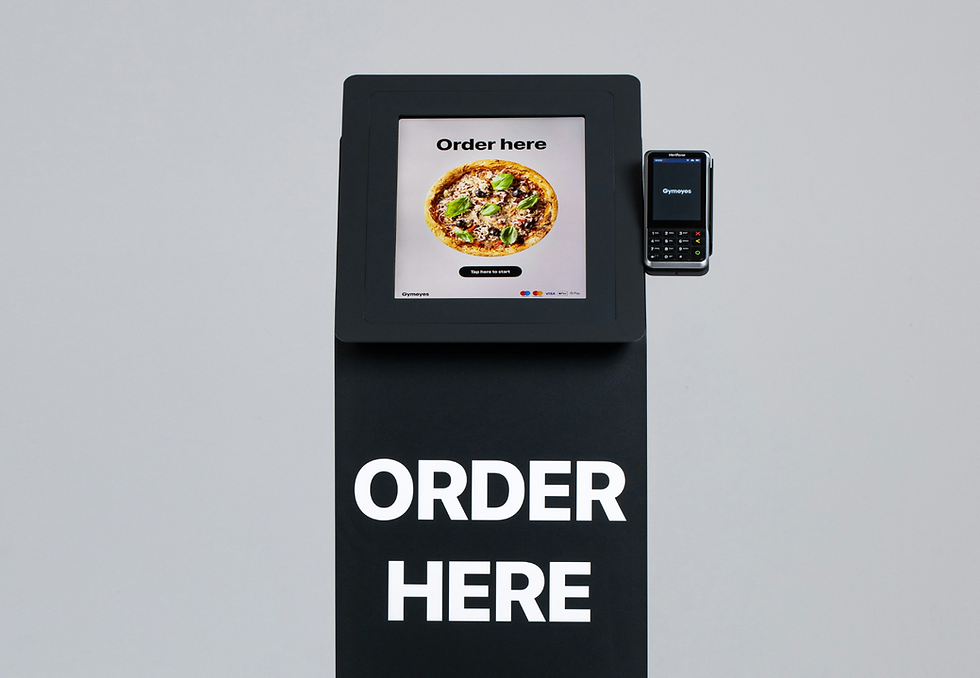
When customers turn to quick-service restaurants (QSRs), they're looking for the promise of a simple, seamless experience. That's where the concept of the connected restaurant comes in, seamlessly integrating POS systems, mobile apps, and kitchen technology for a seamless customer experience. "Four out of five customers say technology influences where they choose to eat," says Canopy, the US provider of remote monitoring and management software for connected systems. Conversely, "when that tech doesn't keep up, customers feel it immediately. Technology is a factor in loyalty but also a disruptor."
The Atlanta-based company recently conducted a small survey of 500 consumers from all walks of life to gauge their perception of the IT solutions offered by McDonald's, Chipotle, and other brands. It emerged that self-ordering kiosks have become essential in the connected restaurant experience. For the speed and accuracy of ordering, the ease of customization, and the extra time spent browsing the menu, more than 60% of customers use them at least occasionally, and 26% say they use them frequently.
Boundless efficiency?
“However, using a kiosk can be frustrating. Only 20% of customers report that kiosk systems always work. 80% have experienced issues, most commonly with misprinted tickets, frozen screens, or kiosk systems being out of service,” highlights Canopy’s report on technology-related friction in fast-food restaurants.
The experience of different customer groups with the kiosks reveals both challenges and opportunities for improvement. The most loyal customers—those who visit QSRs three or more times a week—are also the most enthusiastic users of the kiosks. They rely on them more often and report greater satisfaction.
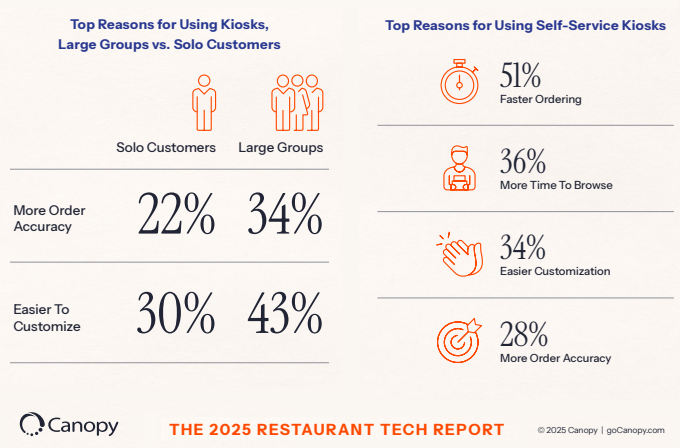
“When kiosks work reliably, they improve the transaction and strengthen customer loyalty. Group orders raise the stakes. Customers who order for both adults and children are more likely to choose kiosks for their accuracy and ease of customization, features that matter even more when orders are large or complex,” the software provider’s reporters argue.
Dysfunctions erode trust, and vice versa
QSR customers who enjoy a consistent and reliable kiosk ordering experience are more likely to return, potentially increasing revenue with each order. As kiosk adoption increases, reliability should improve as well. “This survey shows that the biggest opportunity lies in making existing systems work every time,” Canopy says.
Put another way, when technology works, it doesn't just improve a transaction; it strengthens the business connection. This means that every investment in technology must be accompanied by at least equal attention to maintenance and monitoring. Reliability emerges as the key element that will transform occasional visitors into loyal customers. A "bug" is no longer trivial; it's a point of failure in the customer experience that risks, ultimately, impacting revenue.