“We crossed 1 billion orders processed”: the fantastic ride of the Belgian unicorn Deliverect

Founded in Ghent less than a decade ago, the management platform has quickly emerged as one of the most strategic foodtech players in the global restaurant industry. Today, Deliverect powers over 70,000 establishments worldwide and has just hit the major milestone of one billion orders processed. "Here’s to the next billion", exclaims founder and CEO Zhong Xu.

Over 4,200 new points of sale. In last December alone. “It took us almost three years to reach that number… and today, we do it in a single month,” marvels Zhong Xu. This Shanghai native recalls his beginnings in foodtech when, as a teenager, he used to tinker with “very ugly” websites for Chinese restaurants. He was far from suspecting at the time that, once he became a computer engineer at Ghent University, his software would serve the world’s biggest food brands today.
Like many digital players, Deliverect experienced a decisive acceleration during the coronavirus crisis. When delivery and click-and-collect became conditions for survival for restaurateurs, its platform which centralizes and synchronizes orders from multiple channels went from being a useful tool to critical infrastructure.
Since then, the company has changed scale. Present in over 50 countries, the Belgian unicorn brings on board independent restaurants as well as international chains like KFC, Burger King, and Pizza Hut. Last year, Deliverect crossed a symbolic milestone with over a billion orders processed via its platform. “At peak times, nearly 100 orders pass through its infrastructure every second,” details the co-founder, welcoming the fact that he has helped his hospitality and retail partners generate “more than 25 billion dollars in revenue.”
The American Bet: An “All-in” Strategy
The Belgian scale-up claims a global ambition, but its trajectory remains deeply anchored in the United States. A few years ago, management took a clear strategic decision: to concentrate its efforts on the global benchmark market for foodservice. A risky gamble, fully embraced and visibly paying off.
“We now have over 30,000 active locations in America. We are a key player in this market. We power the restaurants that feed this country, from coast to coast,” assures Zhong Xu, incredibly proud of his local team, seeing millions of orders pass through every week.
For the anecdote, during the July 4th celebrations, management humorously noted that its software had “probably seen more hamburger emojis than the average American sees in a lifetime.”
A “Scalable” Infrastructure Rather Than Flashy Gadgets
Contrary to many startups that multiply visible tools, Deliverect claims a more fundamental positioning: that of “the digital plumbing of the restaurant industry.”
The platform connects restaurants to the delivery economy (Uber Eats, DoorDash, etc.), managing complex integrations with point-of-sale (POS) systems, taxation, and real-time menus. The tech company from Belgium is building an infrastructure upon which other activities can truly scale.
“For restaurateurs: less friction, more growth. That is where the long-term value lies. The future of restaurants will rest on scalable infrastructure,” believes the engineer by training.
AI as a New Operational Lever
A new boost to this ride is artificial intelligence. Deliverect has multiplied announcements in this field, with a strategy resolutely oriented towards operations.
Among the innovations is Resolve, a computer vision solution designed to reduce order errors and contest unjustified refunds. Results communicated by early clients reported “70% protection against revenue loss and a 44% drop in refunds in just 3 months.”
Another notable initiative: the launch of the first library of AI agents specifically designed for the restaurant industry. These agents automate critical tasks such as managing order peaks, regulating flow, A/B testing, and post-service analysis, and they adapt to each establishment and channel.
“Don’t take our word for it. In the Netherlands, KFC automated its Secret Box Meal campaign with the dynamic promotion agent and recorded over 1,000 product codes in a few hours without any manual intervention, and a sales increase of 118% in a single day,” highlights Zhong Xu.
From Invisible Software to Tangible Product
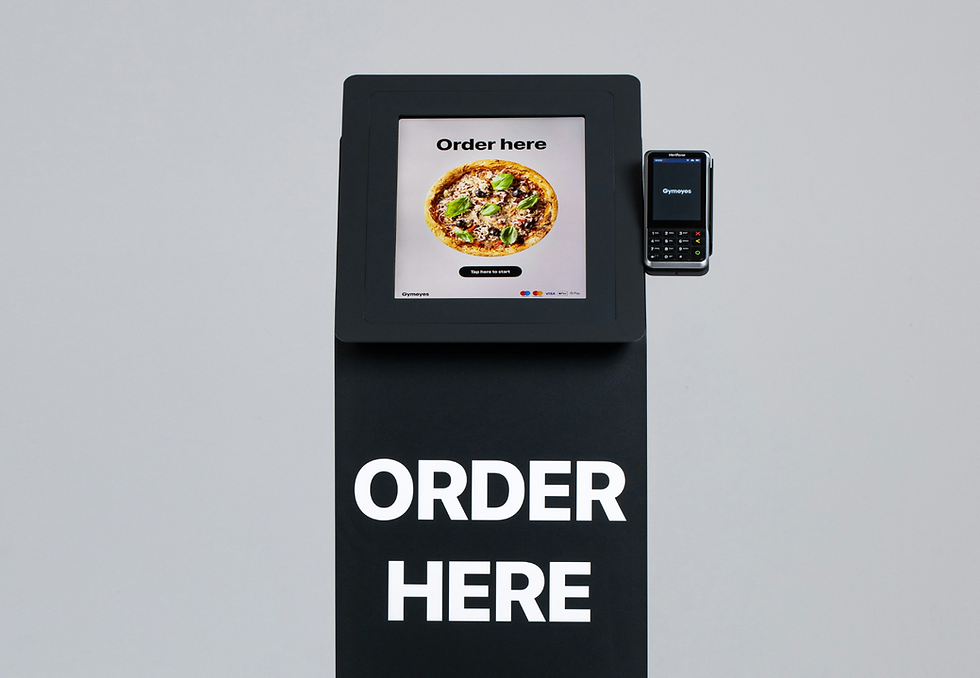
While Deliverect operates mostly in the background, some of its solutions now make the technology visible to the end consumer. This is the case with its ordering kiosk deployed notably at Joe & The Juice at Galeries Lafayette. This device allows customers to order faster, while allowing operators to manage issues like stockouts in real time.
“I stumbled upon our kiosk completely by chance while walking around Paris. I sat down and watched for over 30 minutes. Customers were using it. Orders were flowing in. Service was fluid. Especially when they ran out of avocados: it was handled naturally, so that even on the kiosk, you couldn’t order items they could no longer prepare. Magic!” testifies the boss, candidly admitting that “this moment touched me more than any sales figure or funding announcement.”
For brands, the impact is measurable: increase in average ticket size, increase in additional sales, and drastic reduction in queues. By introducing the Deliverect kiosk, Enrique Moisés Villa, Director of Operations for Pizza Hut in Spain and Portugal, testifies to an impact difficult to ignore: 5% increase in average ticket, 22% rise in additional sales (upselling), 30% more orders per hour, and 90% reduction in queues.
“Staff went from managing queues to focusing on the experience. Pizza Hut unlocked revenue that had always been there, simply hidden behind friction,” confirms the company.
Heading for the Next Billion… in Valuation?
For Deliverect, the course is already set: process hundreds of millions of additional orders, continue to structure a fragmented sector, and make AI an operational standard rather than a simple marketing pitch.
As a reminder, the Belgian company achieved “unicorn” status, valued at 1.4 billion dollars, in January 2022 following a financing round (Series D). A step that, beyond the purely financial aspect, confirmed for Deliverect the relevance of its mission, back when it was reaching nearly 100 million orders…
Launched with the conviction that “restaurants deserve better technology,” the Ghent unicorn does not seem ready to slow down anytime soon.