"Cooking from scratch": The foodservice industry's biggest competitor is its customer

Europeans don't seem ready to hang up their aprons; in fact, their desire to cook is growing stronger. It's a story of returning to basics, tempered by a desire for takeaway options. For those in the food service industry, the challenge is to attract customers who find satisfaction in cooking at home.
“Consumers are less concerned about saving money than in 2025 and place more importance on ready-to-eat meals in 2026,” says the new State of Grocery Retail 2026 study by McKinsey and Eurocommerce.
The analysis is based on a survey of 14,563 respondents spread across 13 European countries and thus measures the evolution of purchase intentions between 2025 and 2026.
Cooking from scratch remains the dominant force
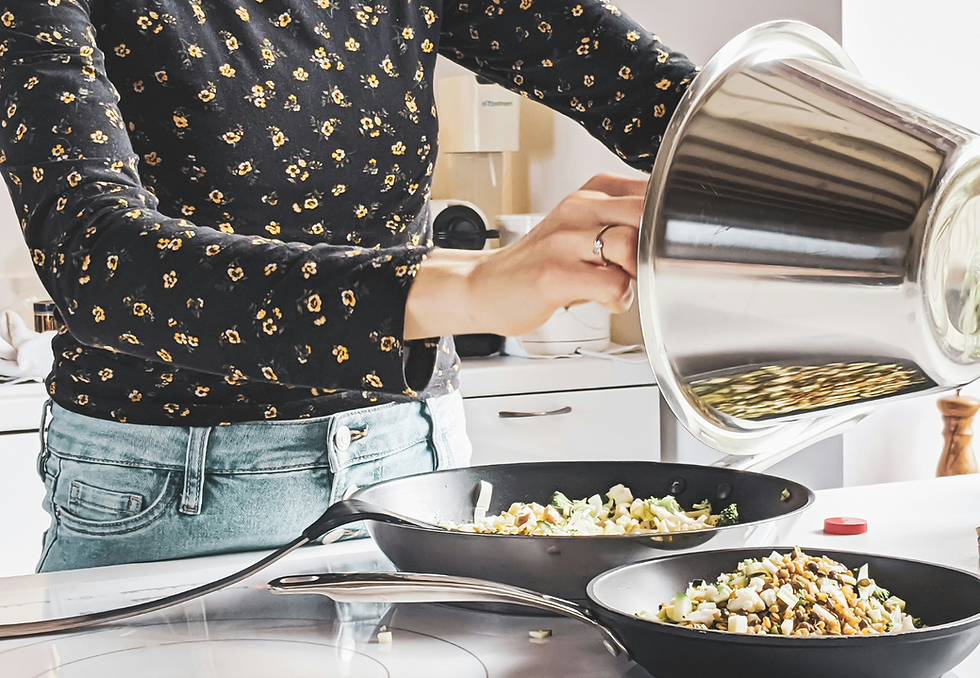
The intention to get involved is highest, averaging 36% across Europe. This trend is on the rise (+2 percentage points) compared to the previous year. This desire to get involved is more pronounced regionally, particularly in Belgium (+4 points to 40%), France (-1 point to 43%), and the Netherlands (+3 points to 37%).
To attract these customers, foodservice could position itself on complexity (dishes that are difficult to make at home) or on an emotional added value that domestic routine does not offer.
Ready-to-eat meals: a rejection that is diminishing
It should be noted that while intentions for ready-to-eat meals are showing slight overall progress (+1pp), the European average indicator remains negative (-13).
Ready-to-eat remains less popular than "food-to-go" (immediate takeaway consumption) which shows a recovery dynamic (+4 pp), even if this segment also shows some disdain (-9).
Among our immediate neighbors, rejection of ready-to-eat meals is highest in France (-18), with intentions further accentuating this distancing (-3 pp). Disinterest is hardly more moderate in Belgium (-16), with a growing tendency toward rejection (-5 pp). Meanwhile, the Dutch express greater attraction (+7 pp) to these ready-to-eat options and are less inclined to reject them (-4). Food and drinks consumed on the go receive slightly less pronounced approval.
In other words, there's a growing interest in on-the-go and fast food. Consumers are starting to return to these options after a period of withdrawal, but they remain selective.
Quality and Health: Values that have reached their limit?
The demand for quality remains the norm, but it is no longer progressing. Consumers want to eat better, but are not willing to sacrifice their purchasing power.
With scores of 29% for nutrition and 26% for fresh produce, these two pillars remain the main drivers of the market. However, they indicate a certain weariness or a trade-off against them.
The intention to pay more for healthcare is negative, and organic products continue to lag behind. At only 2%, interest in premium products is virtually stagnant.
France is above the European average in terms of qualitative engagement, while Belgium and the Netherlands are pulling some indicators down.
The French market is the only one of the three neighboring countries where consumers are willing to pay more for health and quality. While interest in "fresh" and purely "nutritional" products is declining in the Dutch market, there has been a significant increase (+5 percentage points) in willingness to pay for healthy products. The Dutch appear to be becoming more selective.
In Belgium, they say yes to health, but at a fair price. Belgians are very focused on nutrition (+3 points), but they are the most reluctant to pay more.
Key points Consumers are cooking a lot at home. To encourage them to eat out or order food, foodservice providers must focus on immediate convenience and impeccable freshness, without necessarily overselling the "premium" aspect. France is one of the most demanding markets in terms of quality. The French want to cook for themselves, demand fresh, premium products, and are the most willing to pay a premium for healthier options. While the intention to cook is strong, the Netherlands is the most resistant to the decline in ready-to-eat and to-go products, demonstrating a continued need for convenience . Finally, in Belgium, there is a very strong desire to return to traditional, home-style cooking, but with a high price sensitivity.