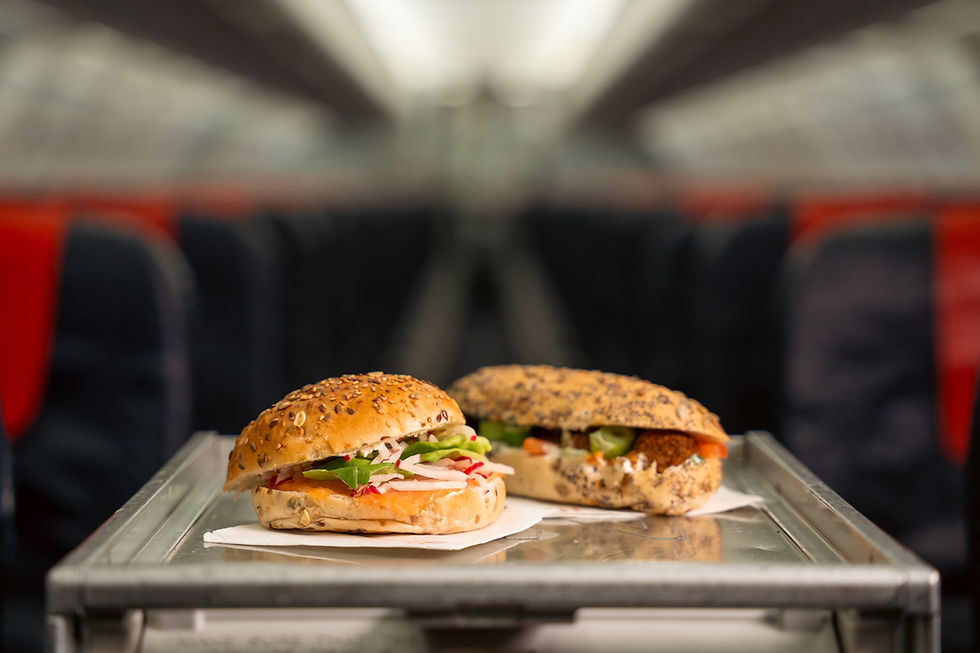
Brussels Airlines ends ten years of "a very beautiful collaboration" with Foodmaker

As a direct consequence of the new partnership with the Belgian ready-to-eat chain Bon (Colruyt) on its European flights, the airline has terminated its agreement, which had been in place since 2016, with the other well-known Belgian prepared meal chain, Foodmaker.
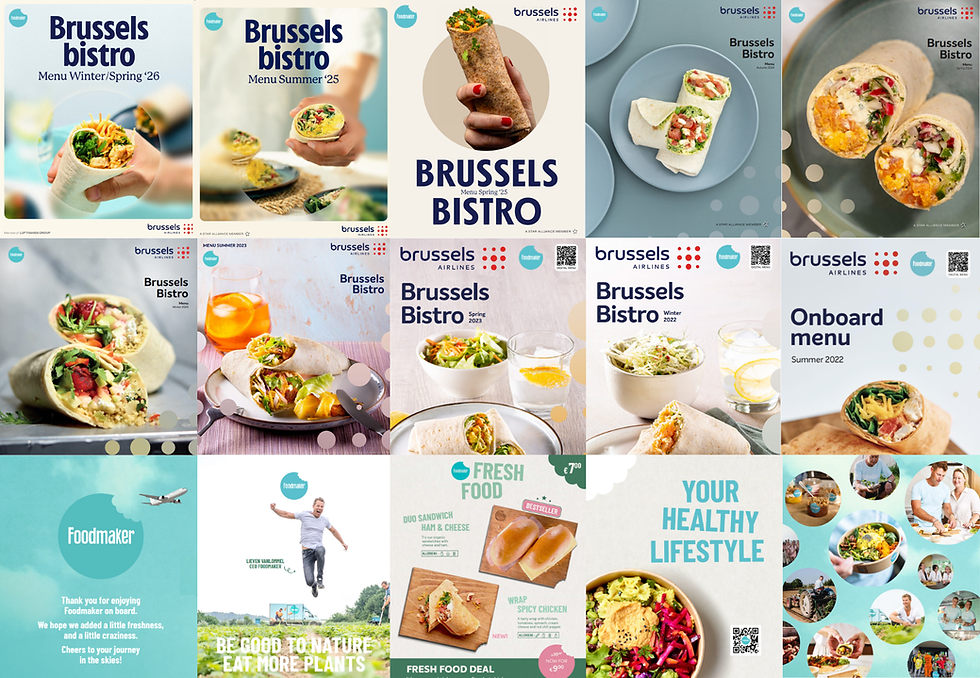
"This is by no means a choice against Foodmaker," assures Nico Cardone, media relations manager for Brussels Airlines. "We have excellent memories of this long collaboration with them." On June 1, 2016, the airline had indeed announced it was pulling out all the stops by offering, for the first time on its European network, products that the young company from Westerlo had created specially for it.
Brussels Airlines, committed to promoting Belgian quality, highlighted at the time "tasty and healthy meals with organic vegetables that come from their own fields or are produced locally." Lieven Vanlommel, the founder and CEO of Foodmaker, welcomed this demonstration by two Belgian companies in the joint press release, proving "that it is also possible to serve healthy food on board airplanes."
During the decade that followed this major commercial contract for the rising ultra-fresh meal chain, Foodmaker's CEO – who was featured seasonally in the menus distributed on board the aircraft – was never very vocal on the subject. Thousands of meals left its central kitchen every day to reach Zaventem airport.
When asked what the termination of this historic partnership with Brussels Airlines means for his rapidly expanding business, the CEO of Foodmaker has not yet had the opportunity to respond. Nevertheless, the Belgian "fast-good" specialist, which dreams of becoming a "green McDonald's," looks back on this adventure with "a lot of pride." "Ten years ago, we introduced fresh and healthy food on board, which gave us great visibility with an international audience," shares Wouter Van Win, communication manager at Foodmaker.
Clipped wings? "No impact on our growth plans"
As is customary, this contract was awarded through a tendering process. Except that this time, Brussels Airlines opted for a change starting from the summer period. "We fully respect this decision," he adds, wishing not to comment further on the tender. "In recent years, we have invested heavily in the development of our retail partners, our Foodmaker cafés, and our international growth. As a result, our customer base today is much broader and more diversified than it was ten years ago."
As an indication, during the Covid-19 pandemic, the near-total shutdown of Brussels Airlines flights caused considerable losses, amounting to 20% of the company's revenue. To the extent that, in its report for the financial year ending December 31, 2020, the company auditor drew attention to the risks that the health crisis posed to Foodmaker's future profitability and business continuity.
The volumes involved in this type of delivery contract with an airline are obviously stratospheric. Drinks, snacks, and other meals number in the hundreds of thousands of units sold, using tens of thousands of tons of ingredients. Accordingly, the new supplier, Bon, is expected to provide around 450,000 sandwiches per year.
"For Foodmaker, this agreement was above all a major marketing investment, and it has no impact on our growth plans for 2026," reassures Wouter Van Win, Foodmaker's communication manager.
The Colruyt effect?
It remains to be seen what criteria influenced Brussels Airlines' final decision to prefer a competitor – which must open a new dedicated production line – over its long-standing partner Foodmaker, whose workshop currently produces 120,000 meals daily "from scratch" using ingredients from its own fields or local producers.
"After a very successful ten-year collaboration, we launched a new open call for tenders in which several suppliers were able to participate," says Nico Cardone, the airline's media relations manager. And the competition yielded the known result. "Bon emerged as the best candidate from the comparative study," he asserts without providing further details, before reverting to somewhat corporate marketing language. "At Bon, we were particularly attracted by the high quality of their products as well as the fact that Bon is a Belgian supplier."
Given the notable presence of the Colruyt Group among the shareholders of this young chain, Bon, a legitimate question arises: what role did the Halle-based retailer play in this deal? Because it is known that the brand promising the lowest prices saved Bon, both financially and structurally, by acquiring a stake in its capital in August 2024, since increasing it to 55%, and standing ready to buy out all shares once commercial targets are met.
When questioned about the influence Colruyt exerted on its decision, Brussels Airlines simply acknowledged that "the fact that a large, reliable Belgian distributor has invested in Bon obviously made them an even more interesting partner for us."